
Dermal Filler Training UK: Your Complete Course Guide from Foundation to Advanced

Dermal fillers are among the highest-earning and most in-demand treatments in non-surgical aesthetics. Lip fillers have become a cultural phenomenon. Cheek enhancement, jawline definition, non-surgical rhinoplasty - client demand across the full filler treatment category is substantial and growing. For practitioners, this represents genuine income opportunity. But dermal filler training UK is not an area to approach lightly.

The anatomy knowledge required is detailed. The technique demands precision. The consequences of poor training - vascular occlusion, tissue necrosis, blindness in extreme cases - are among the most serious in all of aesthetics. This guide gives you an honest, comprehensive picture of what filler training involves, what it requires and how to choose training that genuinely prepares you to practise safely.
What Is Dermal Filler Training and Why It Matters
Dermal filler training equips practitioners with the anatomical knowledge, product knowledge and injection technique required to administer hyaluronic acid fillers safely and effectively across a range of facial areas.
The technical complexity is real and should not be understated. The face is densely vascularised - arteries and veins run throughout the tissue planes that fillers are injected into. Inadvertent intra-arterial injection can occlude blood flow to tissue, causing necrosis, or in worst cases travel retrogradely to the ophthalmic artery and cause permanent vision loss.

This is why the source and quality of dermal filler training UK matters enormously. A course that teaches technique without deep anatomical grounding, that rushes through complication management or that does not include hyaluronidase training is not adequate preparation for independent practice.
Dermal Filler Training UK: Legal Requirements
Dermal fillers are currently not classified as prescription-only medicines in the UK, which means non-medical practitioners can legally administer them. This distinguishes fillers from botulinum toxin, which is a POM and requires a prescriber.
However, this regulatory position may change. The government has been considering legislation that would restrict non-surgical cosmetic procedures to registered practitioners or require prescriber involvement for all filler treatments.
Insurance requirements for dermal filler practice are specific and significant. Policies must explicitly cover each filler treatment area you offer. Never assume that a general aesthetics policy covers all filler treatments without checking.
Dermal Filler Training Pathway: Foundation to Advanced
Dermal filler training is structured as a progression from foundation to advanced, and this progression exists for good reason. Our Foundation Dermal Fillers course covers the initial treatment areas appropriate for practitioners new to filler - cheeks, nasolabial folds and marionette lines being the most common foundation areas.
Our Advanced Dermal Fillers course expands the treatment areas and introduces greater technical complexity - jawline definition, chin projection, tear trough correction and temple filler all require more detailed anatomical knowledge and greater injection confidence.
The Lip Masterclass covers the specific anatomy, product properties and techniques relevant to lip filler in depth - a specialist module for one of the most in-demand filler treatments available.
Practitioners building towards a comprehensive injectable practice may also consider our structured Intermediate Injector course and Advanced Injector course, which combine filler and toxin training within a progressive, structured pathway.
What Foundation Dermal Filler Training Covers
A thorough foundation filler course covers far more than injection technique. The anatomical content is the foundation everything else rests on.
Facial anatomy is covered in depth - the arterial supply of the face, the venous drainage, the danger zones where vascular injury is most likely, and the tissue planes in which it is safe to inject. Understanding the anatomy is not just theoretical - it directly informs needle placement, depth and aspiration technique.
Product knowledge covers hyaluronic acid properties, the difference between cross-linking densities and what this means for product selection by treatment area, filler brands and their specific characteristics.
Complication management is a critical module. Recognising the early signs of vascular compromise - skin blanching, pain, mottled appearance - and responding immediately with hyaluronidase injection is a life skill in filler practice.
Advanced Dermal Filler Techniques
Tear trough correction is one of the most technically demanding filler treatments. The tear trough area has complex vascular anatomy, thin overlying skin and minimal tissue to work in. Poor technique here creates visible lumps, blue discolouration and, in serious cases, skin necrosis.
Jawline and chin definition involves structural filler placed at or near the bone, creating a defined profile through strategic volumisation. Correct product selection and precise placement are the technical challenges.
Non-surgical rhinoplasty - reshaping the nose using filler - is performed in close proximity to nasal arteries and carries significant risk if performed incorrectly. It is not a treatment for practitioners new to advanced filler practice.
Our Advanced Pathway to Aesthetics provides a structured framework for practitioners progressing through these advanced treatment tiers, with clear guidance on prerequisites and logical course sequencing.
Dermal Filler Course Costs UK
Foundation filler training in the UK typically costs between £400 and £900. Advanced courses and specialist modules add to this, with total investment for a full foundation-to-advanced filler qualification portfolio ranging from £800 to £2,000.
Product costs in practice are a significant ongoing expense. Filler syringes from a reputable supplier cost £30-£80 per syringe at wholesale. Hyaluronidase adds further cost and must be on hand for emergency use.
Treatment pricing - lip fillers £250-£400, cheeks £300-£500, jawline £400-£600 - reflects the premium clients are willing to pay for skilled filler work. The return on training investment is rapid for practitioners who build a reputation for natural-looking results.
Hertford Cosmetics Academy Filler Courses
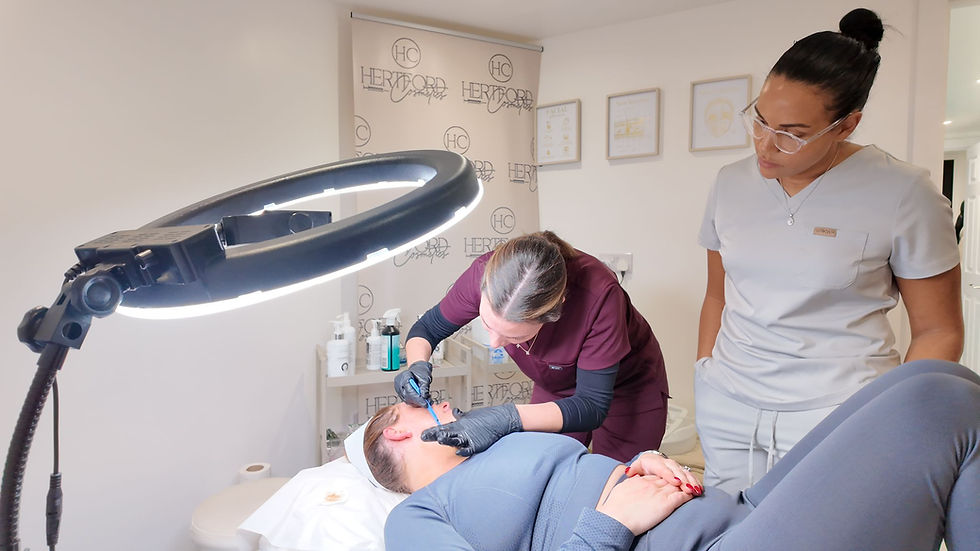
Hertford Cosmetics Academy offers CPD-accredited dermal filler training at foundation, advanced and specialist levels. Our Foundation Dermal Fillers course covers facial anatomy, product knowledge, client consultation, injection technique, complication management and hyaluronidase training. You practise on live models under direct supervision.
Our Advanced Dermal Fillers course builds on foundation skills, introducing additional treatment areas and more complex injection techniques. The Lip Masterclass provides specialist lip filler training in depth.
All courses are CPD-accredited and delivered at our Widford, Ware, Hertfordshire training location by a trainer with 16+ years of practical industry experience.
Key Takeaway
Dermal filler training UK is one of the most commercially significant qualifications in aesthetic practice - and one of the most technically serious. The income potential is exceptional. The responsibility is real. The right training is what connects the two.
Hertford Cosmetics Academy's filler training pathway - from Foundation Fillers through to Advanced Fillers and the Lip Masterclass - takes you through each stage with experienced instruction and CPD accreditation throughout. Book your filler course today.

Frequently Asked Questions
Do I need to be medically qualified for dermal filler training?
Not currently, under UK law. Dermal fillers are not prescription-only medicines, so non-medical practitioners can legally train and administer them. However, training providers typically require evidence of appropriate foundational knowledge, and insurance requirements must be met.
What is the difference between foundation and advanced filler training?
Foundation training covers initial treatment areas and techniques appropriate for practitioners new to filler injection. Advanced training introduces more complex areas, higher-risk techniques and the anatomical knowledge required for procedures like tear trough, jawline and non-surgical rhinoplasty.
How long does dermal filler training take?
Foundation filler training is typically a one or two-day course. Advanced courses generally run over two days. A Lip Masterclass may be a half or full day depending on the provider.
Do I need a prescriber to offer filler treatments?
For dermal fillers alone, a prescriber is not currently legally required in the UK. If you wish to offer botulinum toxin alongside fillers, a prescriber relationship is required.
What insurance do I need after completing filler training?
Professional indemnity and public liability insurance with explicit filler treatment cover, confirming which treatment areas are included on your policy schedule.



_edited_edited.png)

Comments