
PRP Training Course: Your Complete Guide to Becoming an Advanced PRP Practitioner

Platelet-rich plasma therapy - PRP - has earned serious clinical credibility in aesthetic practice. Once associated primarily with sports medicine, it has become a genuinely mainstream advanced treatment, offered by clinics across the UK for skin rejuvenation, hair restoration and scar revision. Clients are drawn to it because it uses the body's own biology.
The growth factors concentrated from the client's own blood stimulate natural tissue repair and regeneration - no synthetic compounds, no foreign materials.

A PRP training course is a significant qualification. It sits firmly in the advanced category, requires existing clinical knowledge and carries real responsibility. This guide covers exactly what PRP training involves, who it is appropriate for, what it costs and what the income potential looks like for qualified PRP practitioners.
What Is PRP Therapy and Why Train in It?
Platelet-rich plasma is prepared by drawing a small amount of the client's blood - typically 10-20ml - and processing it in a centrifuge to concentrate the platelet fraction. Platelets are rich in growth factors - proteins that signal tissue repair and regeneration.
In aesthetics, PRP is used for skin rejuvenation - often referred to as the vampire facial when combined with microneedling - hair loss treatment, scalp health and wound healing support post-procedure.
For practitioners, PRP represents a premium service with premium pricing, low material costs and strong differentiation from standard skin treatments. It is a compelling addition to an advanced aesthetics menu.

PRP Training UK: Legal Requirements
PRP therapy involves venepuncture and injection - both of which carry clinical responsibilities that shape the legal and insurance framework around training.

Most reputable PRP training providers require practitioners to have some prior injection experience before attending PRP training. Our B12 Injections course provides an excellent foundation in intramuscular injection technique, while our Phlebotomy Beginner course develops the venepuncture skills that underpin PRP blood draw.
Insurance for PRP treatments requires CPD-accredited training that includes the full treatment protocol. Clinical waste obligations apply to the sharps and blood product elements of PRP practice.
What Does a PRP Training Course Cover?
A comprehensive PRP training course covers the science, the clinical skills and the practical technique in full.
The science of PRP - understanding what platelets are, how growth factors work and what the evidence says about PRP efficacy in different treatment contexts - is the theoretical foundation.
Venepuncture training is the most clinically significant practical element. Drawing blood safely, selecting the appropriate vein and gauge, managing client anxiety around blood draw and handling the sample correctly before centrifugation are all components.

Centrifuge operation covers device calibration, spin protocols for different PRP collection systems, how to identify the platelet-rich fraction visually, and preparation of the PRP for injection or topical application.
Injection technique for PRP covers intradermal, subdermal and scalp injection protocols. Complication management and adverse event response complete the clinical safety content.
PRP Course Options and Prerequisites
Our PRP Advanced Practitioner course is designed for practitioners who already hold aesthetic qualifications and want to add PRP to their advanced service menu. Prerequisites include prior injection experience and a solid understanding of facial anatomy.
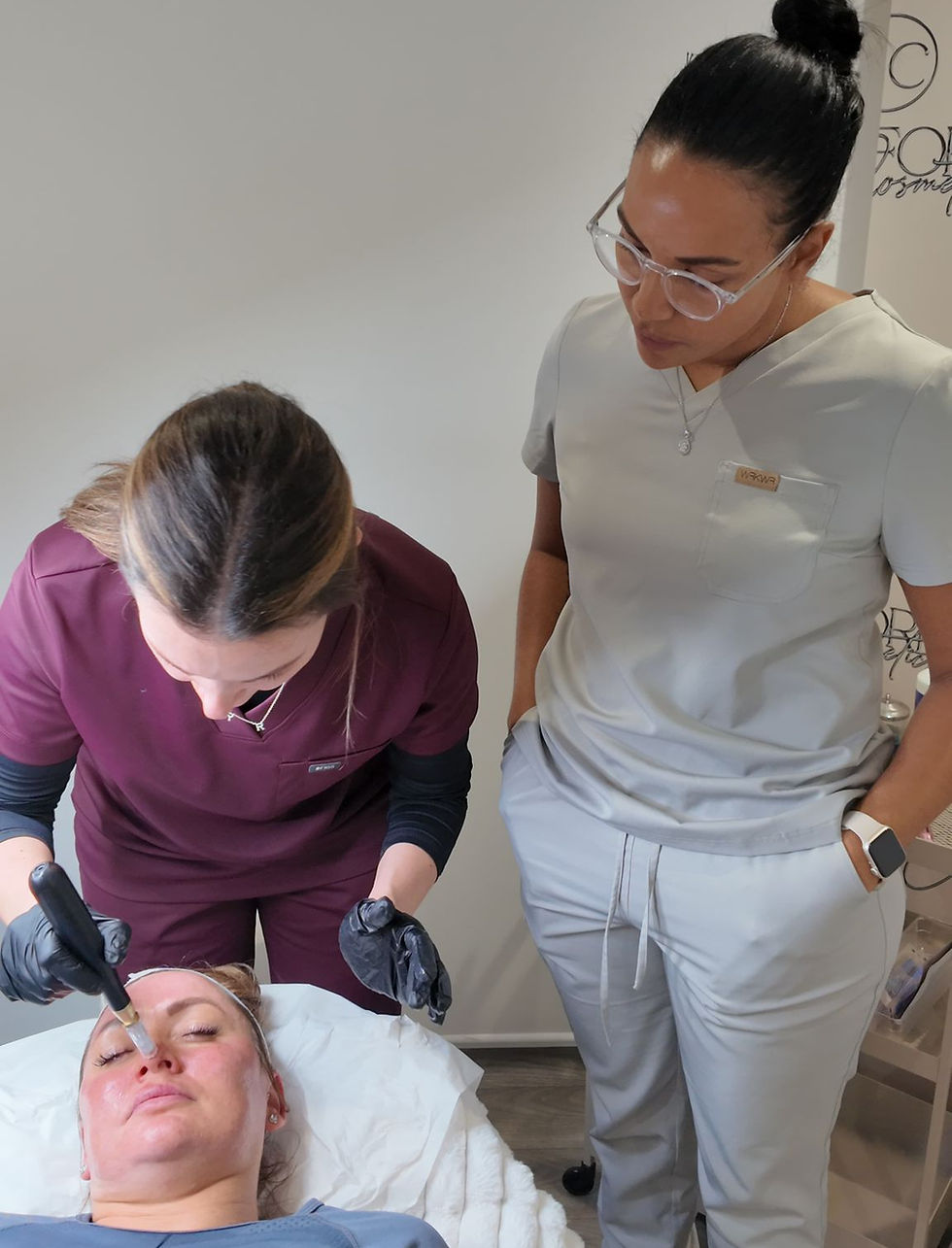
PRP combined with microneedling is the most popular combination protocol in UK practice. If you already hold our Microneedling CPD course qualification, you are ideally positioned to add PRP as a premium combination protocol.
For practitioners who want to build their injection and venepuncture foundations before moving to PRP, our B12 Injections course and Phlebotomy Beginner course provide the ideal preparatory pathway.
PRP Training Costs and ROI
CPD-accredited PRP training courses in the UK typically cost between £400 and £900. Equipment investment after qualifying includes the centrifuge device itself at £800-£3,000, plus ongoing PRP collection kit costs at £15-£40 per kit per treatment.
PRP treatment pricing ranges from £200-£400 for a single session of facial PRP, with scalp PRP for hair loss typically priced at £250-£500. Clients are almost always advised to complete a course of 3-6 treatments, representing £600-£2,400 in treatment revenue per client course.
Delivering four PRP courses per month at an average course value of £800 generates £3,200 in monthly PRP revenue - making the training investment one of the fastest to recoup in advanced aesthetics.
PRP Business and Income Potential
PRP is naturally positioned as a premium treatment. Its autologous nature, clinical credibility and growing evidence base support premium pricing.
Combining PRP with microneedling is the most commercially powerful protocol for skin rejuvenation. The combination delivers superior results to either treatment alone and justifies a premium price point of £300-£500 per session.
PRP for hair loss addresses a large and underserved client demographic. Many clients seeking non-surgical hair restoration have limited high-quality options, and a qualified PRP hair practitioner with documentable results can build a strong referral-based practice in this area.
Practitioners looking to further expand their advanced service menu may also be interested in our IV Drips Advanced course - another premium wellness treatment that complements PRP well in a high-value aesthetics practice.
Hertford Cosmetics Academy PRP Course
Our CPD-accredited PRP Advanced Practitioner course delivers comprehensive training in PRP preparation, protocol and application, delivered at our Widford, Ware, Hertfordshire training location.
The course covers PRP science and evidence, venepuncture technique, centrifuge operation and plasma preparation, injection protocols for facial rejuvenation and scalp treatment, complication recognition and response, and documentation requirements.
Prerequisites apply - this course is designed for practitioners with existing aesthetic qualifications and injection experience. If you are building towards PRP, we recommend beginning with our Microneedling course and B12 Injections course as preparatory qualifications.
Key Takeaway
A PRP training course is a genuinely compelling advanced qualification for practitioners ready to move into the premium tier of aesthetics practice. High treatment value, growing client demand, strong clinical credibility and natural synergy with microneedling make PRP an outstanding addition to an advanced aesthetics menu.
At Hertford Cosmetics Academy, our CPD-accredited PRP Advanced Practitioner course delivers the clinical knowledge, hands-on technique and professional credentials you need. Explore the course and book your place today.

Frequently Asked Questions
Do I need to be medically qualified to train in PRP?
Not necessarily, though most providers require prior injection experience and existing aesthetics qualifications. Complete beginners are not appropriate candidates for PRP training.
What is a vampire facial and does PRP training cover it?
The vampire facial combines PRP with microneedling. PRP training covers the preparation and application of PRP - if you also want to deliver the combined protocol, you need a microneedling qualification alongside your PRP training.
How many sessions do clients typically need for PRP results?
Most protocols recommend an initial course of 3 sessions spaced 4-6 weeks apart. Maintenance sessions are typically recommended every 6-12 months thereafter.
Can I add PRP to a skin-focused aesthetics practice?
Yes. PRP integrates naturally with microneedling and skin rejuvenation practice. It adds a premium treatment tier and appeals to clients interested in natural, regenerative approaches to skin health.
What equipment do I need to offer PRP treatments?
A centrifuge device (£800-£3,000), PRP collection kits, standard injection consumables and appropriate clinical waste management. Your training provider can advise on specific equipment recommendations.


_edited_edited.png)

Comments